The Nine-Point Room Sweep Before Checkout
Most forgotten objects are not dramatic. They are cables behind the nightstand, a bottle on the shower shelf, and a card still in the safe. A fixed sweep finds them while the bags can still open and the room is still yours.

A quick look around the room feels thorough until you are already in the corridor. That is when people remember the balcony latch, the fridge, or the jacket pocket that still holds a room card. The problem is not carelessness. The problem is an unordered search. Eyes jump from bed to bathroom to desk without a sequence, so the same places get checked twice and the quiet places get skipped.
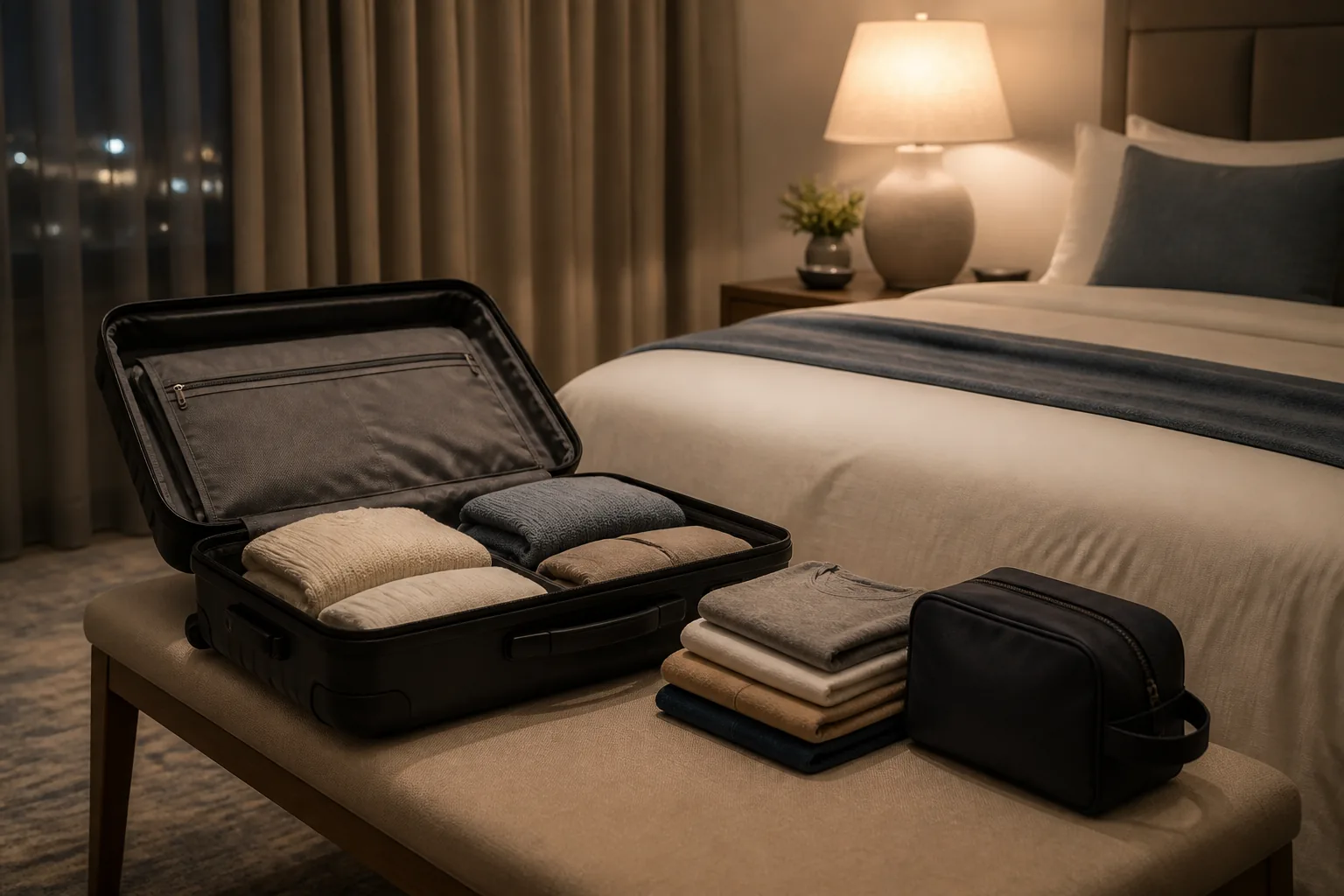
The nine-point sweep is meant to be dull and repeatable. It works best after the main bag is mostly packed and before you hand over keys. Keep one bag slightly open until the sweep ends. Finding a charger is useless if every compartment is already sealed and the elevator is waiting.
Run the points in the same order every time
Order matters because memory fails under time pressure. When the list is fixed, you do not invent a new path for each lodging. You simply walk the same nine checks, even in an unfamiliar layout. Start high and obvious, then move to edges and pockets.
- Safe: open it, empty it, and leave it open if house rules allow.
- Sockets and power strips: unplug every cable and feel behind furniture.
- Bathroom shelf and shower niche: bottles, floss, and razor bases hide there.
- Wardrobe and hangers: check shelves, ironing board nooks, and laundry bags.
- Drawers: nightstand, desk, and any under-TV cabinet.
- Under the bed and behind the headboard: chargers and pens fall here often.
- Balcony or window latch area: small items left when drying clothes.
- Fridge and minibar shelf: leftovers, medicine, and sealed snacks.
- Jacket and bag pockets you already put on: keys, cards, and earbuds.
The last point surprises people. Once a jacket is on, the mind treats it as finished. Yet that is where yesterday’s key card and a single earbud often remain. Check pockets before you leave the room, not at the desk while someone is waiting behind you.
A sweep is not a second packing session. It is a hunt with a map, finished while the bags can still accept what you find.
What to do when the layout is different
Not every room has a balcony or a visible safe. Keep the nine points anyway and mark missing ones as not applicable without inventing replacements on the spot. If there is no safe, say so out loud and move on. If there is a kitchenette, treat the counter and sink as part of the bathroom-shelf check so wet items are not left on stone surfaces.
- Say each point as you touch it so companions know what is already done
- Place found objects into one open pouch instead of scattering them again
- Do not start the farewell walk until the ninth point is complete
- Leave towels gathered and trash bagged as courtesy, not as decoration
Couples and groups should assign the sweep to one person while another watches bags at the door. Two people sweeping at once creates crossed paths and false confidence. One voice calling the list is enough. The second person can confirm empty drawers by sight without restarting the sequence.
Timing the sweep inside the last morning
Do not save the sweep for the exact checkout minute. It belongs after dressing and before the desk visit, while you still own the room. If breakfast is part of the plan, run the sweep after breakfast only if bags can stay in the room. Otherwise sweep first, then eat with a closed main bag and a known list of remaining hand items.
Children and slower companions need the sweep to stay short and spoken. Call the points clearly, avoid turning drawers into a game, and keep found objects in one pouch so the floor does not become a second sorting area. If someone is anxious about leaving something behind, let them watch the list rather than invent a new search path.
Desk staff see the same leftovers repeatedly: chargers, jewelry in safes, and bottles on wet shelves. Your job is not to impress them. Your job is to finish the room so the handoff is short and the hallway stays clear. A finished sweep also protects the buffer to transport, because turning back for a forgotten cable is how calm departures become sprints.
After the ninth point, close the last pocket, look once at the open safe and open drawers, and leave. Habit will try to add a tenth wandering search. Resist it. If the nine points were done in order, another circle rarely finds anything new and often costs the minutes you meant to keep for the road.
Write the nine points into your notes app or on a paper card if this is your first calm departure. After two or three stays, most travelers remember the order without looking. Until then, a visible list beats confidence. Lodgings change. The places small objects hide do not change much. That is why a fixed sweep beats a hopeful glance every time.