Pack the Night Before, Not at Dawn
The hardest part of the last morning is rarely the desk. It is the open suitcase that still holds yesterday’s decisions. Closing most of the bag the evening before turns dawn into a short finish, not a scramble across the floor.
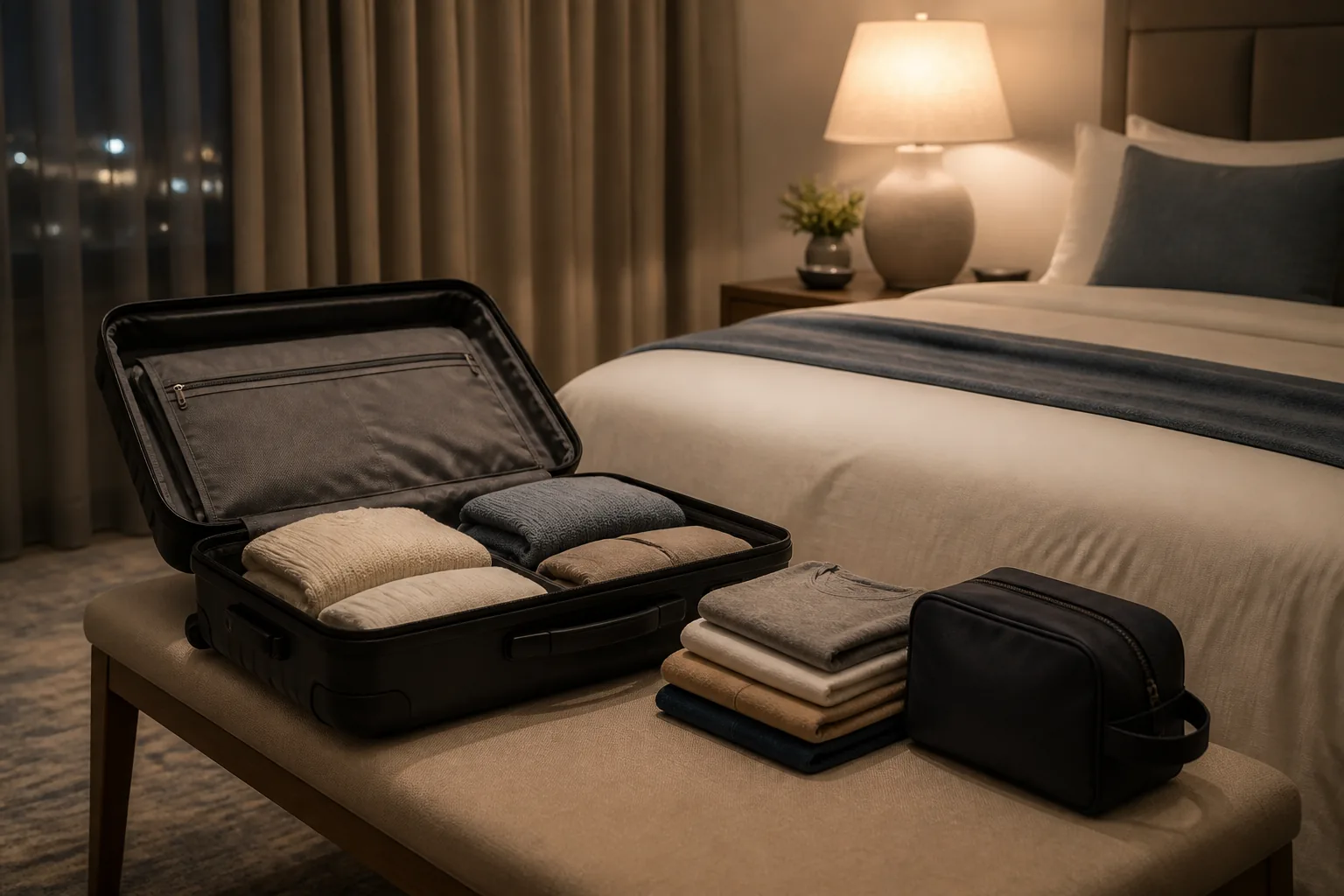
Many travelers treat packing as something that happens when the alarm rings. Clothes still hang in the wardrobe. Chargers sit in three places. Souvenirs wait on the desk. When the morning starts that way, every minute meant for the room sweep and the walk to transport gets spent deciding what belongs where. The night before is the better place for those decisions, because you still have light, a clear table, and no countdown pressing on your shoulders.
A night-before split does not mean packing every last item. Sleepwear, the wash kit, the charger still in use, and the clothes you will travel in should stay out. Everything else can go in while you are still calm enough to notice gaps. The goal is a bag that is mostly closed when you wake, with a small set of objects that will join it after breakfast and the final room check.
Decide the two piles before you undress for bed
Start with two piles on a flat surface: “travels tomorrow” and “stays out tonight.” The first pile includes clothes you will not wear again, layers you no longer need, and gifts or papers that are finished. The second pile is short on purpose. If an object does not clearly belong in either pile, it usually belongs in the first one. Indecision is what fills the morning with noise.
- Lay out travel clothes and shoes for the morning in one place.
- Pack bulky items and anything you will not touch again before checkout.
- Leave only wash kit, sleepwear, active chargers, and documents still in use.
- Close the main compartment once those choices are made.
Closing the main compartment matters more than people expect. An open bag invites one more shirt, one more book, one more “maybe.” A closed zip turns the remaining work into a short list instead of an open negotiation with the room.
If the suitcase is still deciding for you at dawn, the morning is already late, even if the clock says otherwise.
What usually belongs in the bag the evening before
Heavy clothing, laundry bags, spare shoes, and most accessories can leave the room surface early. So can adapters you are no longer using and cables for devices you will not charge overnight. Keep the document pouch accessible, but you do not need every page scattered across the desk. One folder in the carry-on is enough if tickets and identity papers are already inside it.
- Clothes you will not wear again on this stay
- Souvenirs and sealed packages that no longer need handling
- Extra footwear and bags that will not be used in the morning
- Toiletries you will not open again before checkout
Leave space near the top for the morning set. People often pack so tightly the night before that the wash kit and travel clothes no longer fit. A small empty pocket or a soft gap under the lid is not wasted space. It is the room you will need when the alarm ends and the desk hour arrives.
Keep morning work boring on purpose
When the night-before split is done well, morning tasks are repetitive and short: dress, wash, unplug the last charger, drop the remaining items into the open pocket, and run the room sweep. You should not be matching socks or folding jackets while the checkout line grows. Boring is the point. Boring means the sequence is already known.
If you travel with more than one person, agree the split out loud before bed. Shared mornings fail when each person assumes someone else packed the shared adapters or the shared pouch. One short conversation the evening before prevents three overlapping searches at dawn.
Lodging rules still matter. Confirm whether bags may stand near the desk after checkout and whether breakfast is still available. Those details do not change the packing split, but they change how much time you protect after the bag is closed. The night before is also a good moment to set that buffer so “one more stop” does not appear as an improvisation in the hallway.
A calm departure is not a perfect room. It is a room where the hard choices already happened. Pack most of the bag before sleep, leave only what morning still needs, and let checkout begin with a closed zip instead of an open debate.