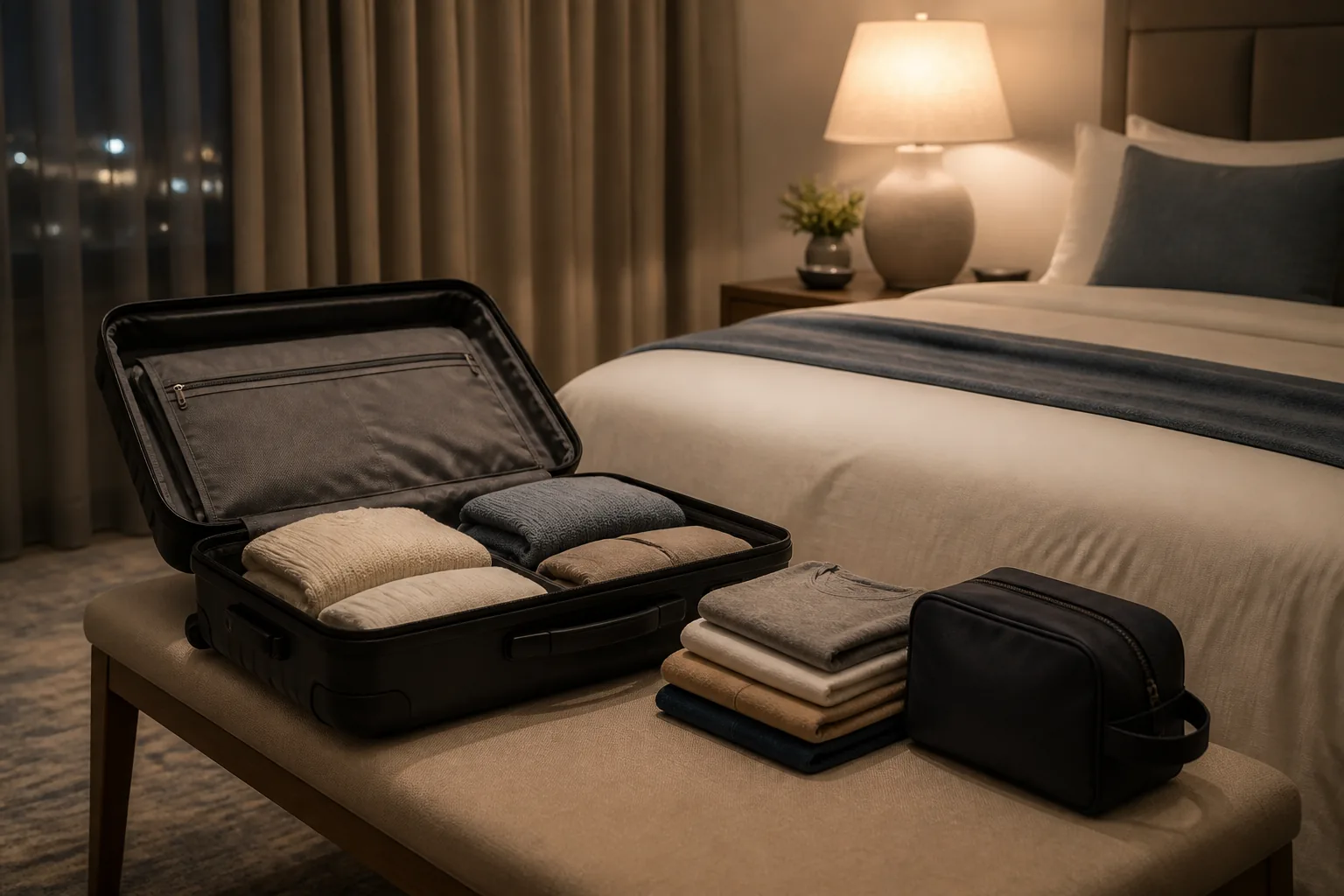
Protect the Buffer to Your Train
The phrase that breaks a last day is simple: we can still fit this on the way. Traffic, ticket checks, and a slow elevator do not care about that plan. A protected buffer does.
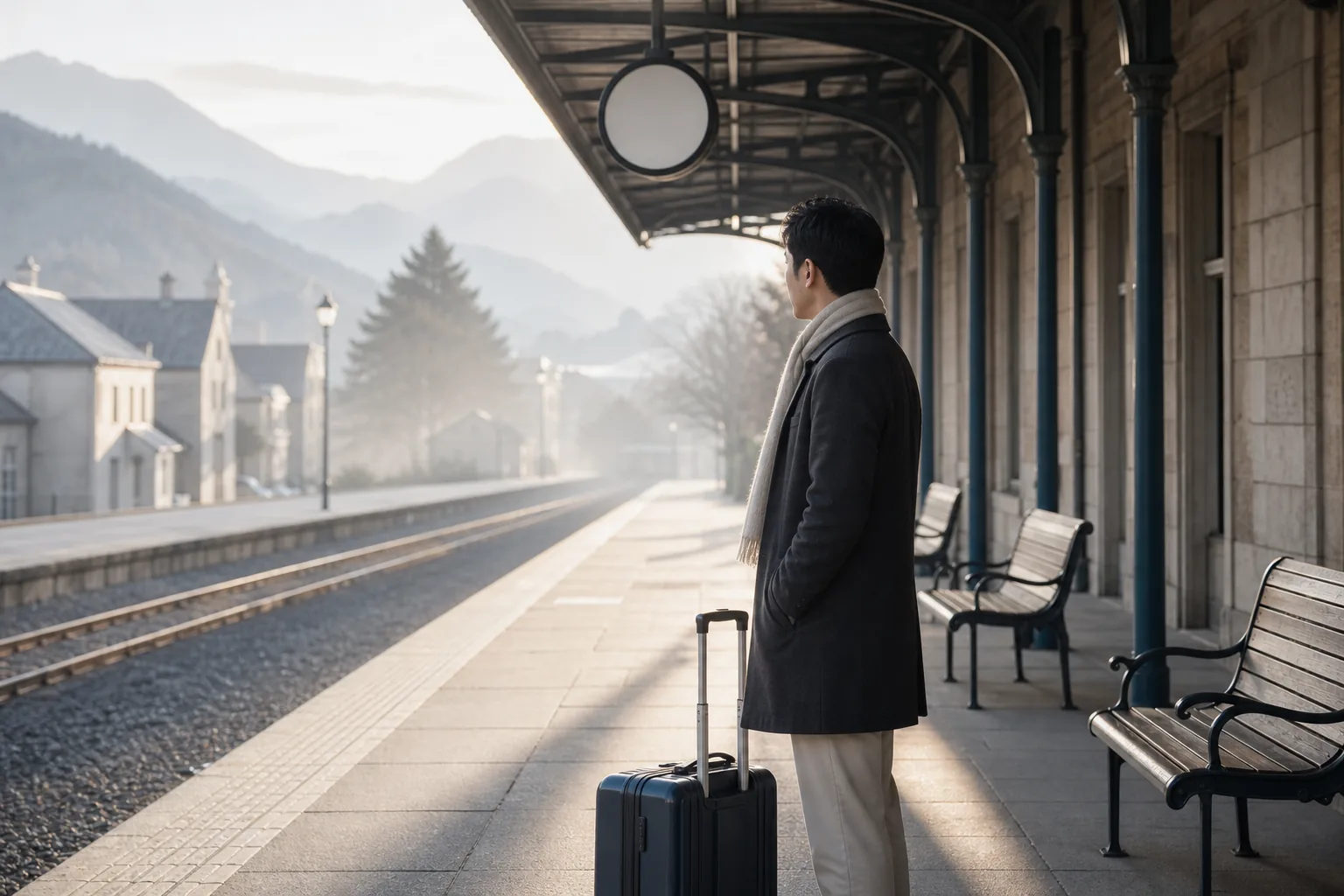
After bags are closed and keys are returned, the remaining risk is not packing. It is time. Travelers often treat the gap to the station as flexible space for one bakery, one viewpoint, or one errand that “is on the route.” On a map it looks harmless. With rolling bags, a busy sidewalk, and a fixed departure, that stop usually costs more minutes than the map suggests.
A buffer is not empty waiting. It is the planned surplus between leaving the lodging and being ready at the platform or gate. It absorbs a late elevator, a long desk line, and a slow transfer without turning the farewell into a run. Once you name the buffer, you can decide what still fits before it starts—and what must wait for another trip.
Experienced travelers do this counting quietly. Newer travelers often skip it because the route “looks short.” Short on foot without bags is not the same as short with bags, children, or a pickup that arrives late. Write the buffer as a number, not as a hope.
Count backward from the hard edge
Begin with the departure you cannot move: train time, boarding window, or pickup. Then subtract the walk or ride from door to platform under realistic conditions, not under ideal ones. Add desk time if keys are not yet returned. What remains is the only window available for a farewell loop. If that remainder is thin, the loop shrinks or disappears.
- Write down the transport departure as a fixed edge.
- Estimate door-to-platform time with bags, not without them.
- Add a margin for desk queues and slow corridors.
- Treat whatever is left as the only farewell budget.
Groups fail this count when each person uses a different mental clock. Agree the buffer out loud before checkout. One shared number prevents three competing “quick stops.” If someone wants a photo at a distant corner, schedule it before the buffer begins or leave it for a future stay.
A farewell walk that eats the buffer is not a goodbye. It is the opening act of a sprint.
What a short farewell loop can still include
Protecting the buffer does not ban saying goodbye to the district. It bans distant landmarks and open-ended browsing. A nearby cafe you already know, a waterfront you can reach without crossing the whole center, or a quiet square beside the lodging can close a trip without rewriting the clock.
- Stay near the lodging or on the true path to transport
- Keep bags with you or in an agreed hold—do not invent storage mid-route
- Refuse new stops after the buffer clock starts
- Arrive early enough to stand still before boarding, not to negotiate tickets late
The same rule applies to cars and airport runs. “On the way” still invites delay when traffic appears or a drop-off line stretches. If you want one last look at a place, take it before the buffer begins. After that, the only job is to reach transport without inventing work.
When the buffer holds, the last memory of the trip is often quieter: a platform with time to spare, a seat found without rushing, a bag that stayed closed. Protect the gap, keep the farewell short, and let the journey home start seated instead of breathless. That is how a last day keeps the rest of the trip intact.
One sentence to keep
Before you leave the desk, say the buffer out loud: we leave at this hour, we arrive by that hour, and nothing new enters the gap. If a suggestion appears after that sentence, it belongs to another day. The discipline sounds strict until you feel the difference between walking to a train and chasing one.